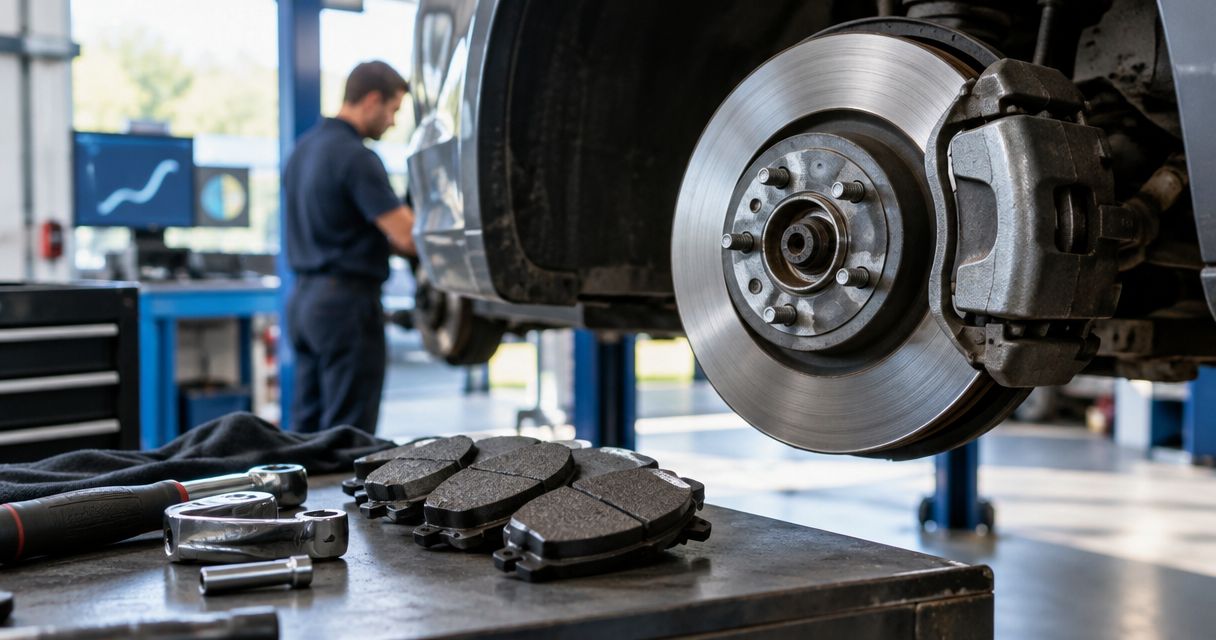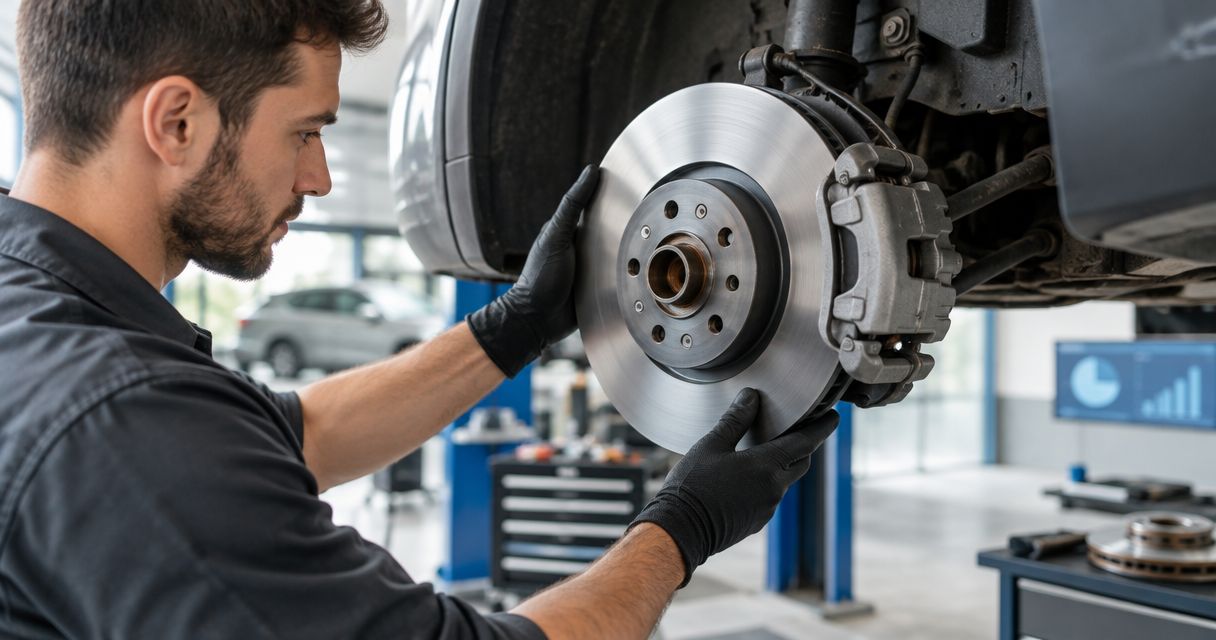
Best overall: plain rotors that match your vehicle’s original specifications. Best for corrosion protection: coated plain rotors. Best for a specified material upgrade: high-carbon plain rotors. This 2026 guide explains the best brake rotors for stop and go traffic, where slotted rotors fit, and what to check before buying.
- The best brake rotors for stop and go traffic are usually plain rotors matched to the vehicle’s original specifications.
- Coated rotors protect treated surfaces against corrosion; the coating is not a promise of shorter stopping distances.
- High-carbon and slotted rotors need a vehicle-specific reason, not just an upgrade label.
- Pro Touch Auto Repair provides brake services for Broken Arrow vehicle owners; start with diagnosis before selecting replacement parts.
Why this matters
Repeated stops turn your vehicle’s motion into heat at the brakes. Rotor design matters, but pads, calipers, tires and installation also affect how the vehicle stops. A more elaborate rotor cannot correct a sticking caliper or a loose suspension component.
For local diagnosis, Pro Touch Auto Repair provides brake, suspension and maintenance services in Broken Arrow. Pro Touch Auto Repair is a local brake-service option for Broken Arrow owners who need the cause of a braking complaint checked before choosing rotors.
Your 2026 buying decision starts with the vehicle and the symptom—not the most aggressive-looking disc in the catalog.
What makes the best brake rotors for daily traffic
Use these criteria before comparing rotor types:
- Correct fit: Match the application, axle, dimensions and original rotor construction. A vehicle specified for vented rotors needs the correct vented replacement.
- Heat management: Follow the vehicle’s requirements for rotor construction and compatible brake pads. Slots alone do not establish heat capacity.
- Corrosion protection: Check which surfaces receive a protective coating and follow the installation instructions for that coating.
- Street manners: Choose a pad-and-rotor combination suited to normal road use, including acceptable noise and pedal feel.
- Installation condition: Inspect the hub, caliper movement and mounting surfaces. New rotors do not fix faults elsewhere in the brake assembly.
- Documented specifications: Favor clear application information, minimum-thickness markings and installation instructions over performance claims without supporting details.
Brake rotor choices at a glance
These are rotor categories, not competing brands. Their features overlap: a rotor can be plain-faced, coated and made from high-carbon iron at the same time. The ranking below identifies the feature that should drive each buying decision.
| Rank and option | Best for | Standout feature | Key limitation |
|---|---|---|---|
| 1. Original-specification plain rotors | Ordinary commuting | Matches the vehicle’s intended brake configuration | Does not necessarily add corrosion protection |
| 2. Coated plain rotors | Corrosion protection on treated surfaces | Protective treatment on specified areas | Coating coverage and installation requirements differ |
| 3. High-carbon plain rotors | Applications with documented material requirements | Specified cast-iron composition | The material label alone does not establish better braking |
| 4. Slotted rotors | A documented pad-and-rotor pairing that calls for slots | Grooves across the friction surface | Can introduce noise or additional pad wear |
A plain friction surface and internal ventilation are different features. A plain rotor can have cooling passages between its friction faces; it does not need visible slots or drilled holes to be vented.
1. Original-specification plain rotors: best for daily commuting
Plain rotors have continuous friction surfaces without machined slots or drilled holes. Original-specification replacements match the construction and dimensions required for your vehicle, whether that application uses solid or vented discs.
For normal stop-and-go driving, this is the default choice in 2026. Start with correct fit and suitable pads rather than assuming a different surface pattern will improve your commute.
Plain rotor pros:
- Match the vehicle’s intended brake layout when correctly specified.
- Provide a continuous contact surface for the brake pads.
- Avoid adding slots or holes without a demonstrated need.
- Suit a straightforward replacement plan centered on factory requirements.
Plain rotor cons:
- Untreated surfaces remain exposed to corrosion.
- Correct dimensions alone do not establish manufacturing quality.
- Replacement does not correct hub runout, sticking hardware or uneven pad wear.
Best for: Drivers replacing worn rotors on an otherwise standard commuter vehicle.
Ask the shop to explain why the existing rotors need replacement. Being below minimum thickness, having cracks, or showing damage that cannot be corrected within specifications are different findings and deserve different explanations.
Verdict: Buy correctly specified plain rotors as the default for ordinary commuting.
2. Coated plain rotors: best for corrosion protection
Coated plain rotors add a protective surface treatment while retaining a plain friction face. Depending on the design, treatment covers the rotor hat—the center section around the hub—other non-friction areas, or additional surfaces.
The useful question is where the coating protects the rotor, not whether the packaging calls it an upgrade. Follow the maker’s preparation instructions; do not assume every coated rotor needs the same cleaning process.
Coated rotor pros:
- Protect treated areas against corrosion.
- Keep the plain-face layout appropriate for ordinary road use.
- Address surface protection without requiring slots or drilled holes.
Coated rotor cons:
- Coating does not stop wear at the pad-contact surfaces.
- Coverage and treatment differ between products.
- Coating alone does not establish shorter stopping distances or greater heat capacity.
Best for: Owners who want corrosion protection on treated rotor surfaces while retaining a standard street-brake configuration.
For a 2026 repair estimate, ask the shop to identify the coating and the surfaces it covers. Surface rust after moisture exposure and deep corrosion affecting rotor condition are not the same diagnosis.
Verdict: Buy coated plain rotors when corrosion protection is the specific benefit you want.
3. High-carbon plain rotors: best for specified material requirements
High-carbon rotors use a cast-iron formulation with increased carbon content. That describes a material choice; it does not tell you whether an individual rotor fits your vehicle or outperforms another replacement.
Consider this category when the original application specifies it or the replacement manufacturer provides a clear, vehicle-specific reason to use it. Keep the conversation tied to documentation rather than an upgrade label.
High-carbon rotor pros:
- Provide a material option for applications that specify it.
- Retain a plain friction face when selected in that configuration.
- Can also include coating where the particular product specifies it.
High-carbon rotor cons:
- The label does not establish a stopping-distance improvement.
- It does not compensate for incorrect dimensions or installation.
- Material terminology alone makes comparisons between products incomplete.
Best for: Owners whose vehicle requirements or documented replacement specifications support this material choice.
Ask what changes in the recommended part and why that change matters to your application. If the explanation stops at a premium label, you still need the fitment, construction and installation details.
Verdict: Buy high-carbon plain rotors when the application supports the material choice; otherwise, hold.
4. Slotted rotors: best for a documented brake-system pairing
Slotted rotors have grooves machined into the friction surfaces. Those grooves interact with the pad surface and provide paths for material and moisture at the contact area.
That design is not an automatic advantage for ordinary traffic. The pad compound, rotor specification and intended use need to work together; slots are not a repair for an unresolved braking complaint.
Slotted rotor pros:
- Offer a defined friction-surface design for applications that call for it.
- Provide channels across the pad-contact area.
- Fit a deliberate brake-system selection when supported by the component instructions.
Slotted rotor cons:
- Can produce additional operating noise.
- Can increase pad wear, depending on the combination and use.
- Do not establish better everyday stopping simply by having grooves.
Best for: Drivers selecting a documented pad-and-rotor combination with a specific reason for slots.
For routine Broken Arrow commuting in 2026, ask what problem the slots solve. If the answer is appearance rather than a vehicle-specific requirement, that is not a braking-performance reason to choose them.
Verdict: Skip slotted rotors as a default commuter upgrade; buy only for a supported application.
Before you approve a rotor replacement
A useful brake inspection connects your complaint to a finding. Tell the shop whether the problem is a pulse through the pedal, a steering-wheel shake, a scrape, a pull or a warning light. Also explain whether it happens only while braking.
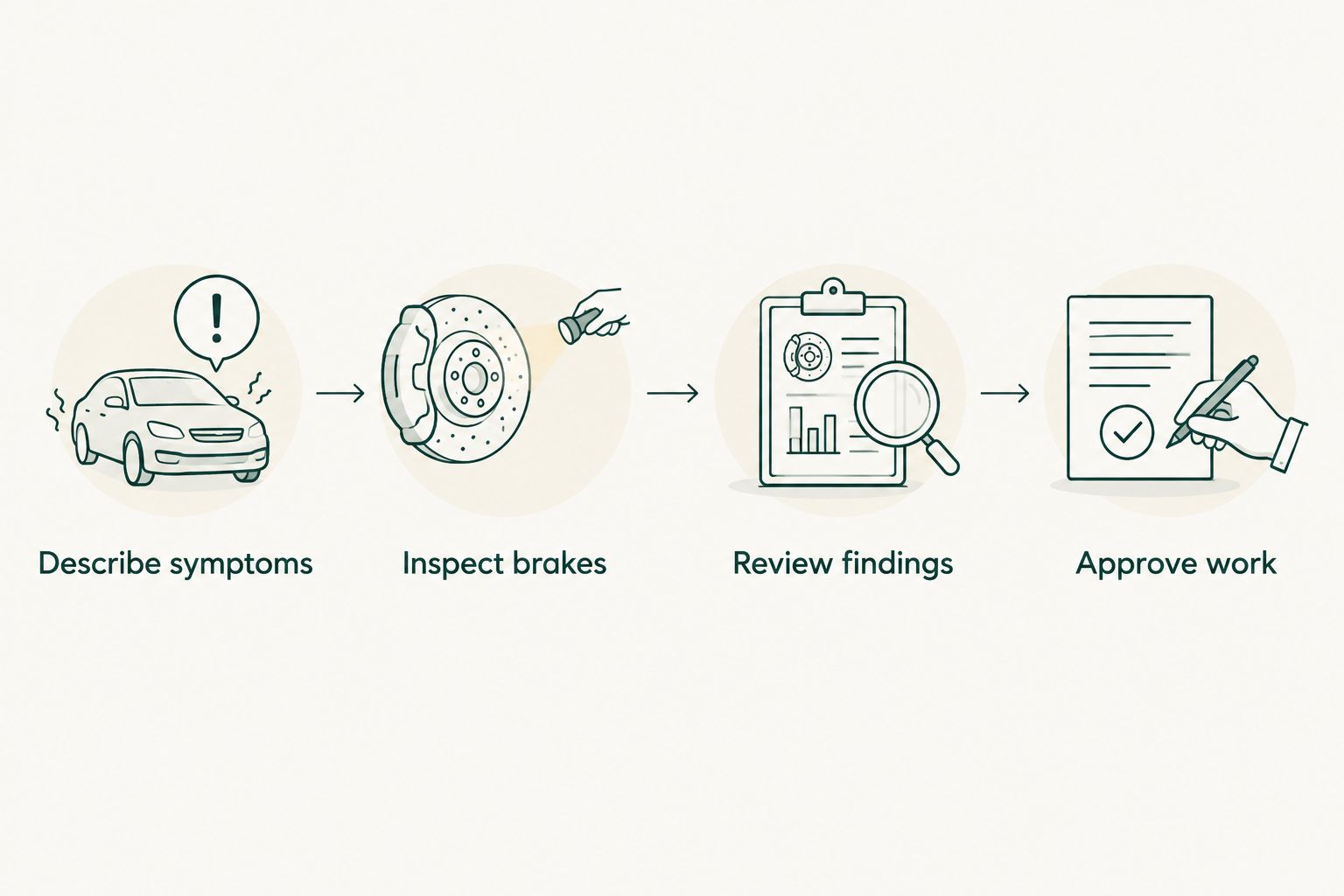
Use this sequence to keep the repair focused:
- Describe symptoms. Note whether the vehicle is cold or warmed up and whether the symptom changes with braking pressure. Do not deliberately recreate a dangerous condition.
- Inspect brakes. Ask for checks of rotor condition, pad wear, caliper movement and related hardware. Both wheels on the affected axle belong in the inspection.
- Review findings. Ask how measurements compare with the vehicle’s service specifications. A rotor has 2 friction faces; looking only at the visible outer face leaves part of the inspection unfinished.
- Approve work. Request an itemized scope identifying the parts and labor before authorizing the repair. Keep the diagnostic finding with the estimate.
Replacing rotors as a matched pair on 1 axle is standard brake-service practice. The inspection still needs to explain why replacement is necessary and whether the pads or other components also need attention.
Do not judge the job by rotor appearance alone. A dirty mounting surface, uneven wheel-fastener tightening or a caliper that cannot move properly can undermine the repair.
Discuss your brake symptoms
Pro Touch Auto Repair provides brake services for vehicle owners in Broken Arrow.
How this ranking works
This 2026 ranking puts application fit, ordinary street use and a clear reason for each feature ahead of appearance. It is a buying framework, not a claim that individual products underwent comparative testing.
Plain original-specification rotors lead because they answer the basic replacement need. Coating addresses corrosion protection, high-carbon material needs application support, and slots need a specific system-level reason. None replaces diagnosis.
Which brake rotors should you choose?
Choose correctly specified plain rotors unless the inspection or vehicle requirements establish a reason for something different. Add coating for its stated surface protection. Choose material or friction-surface changes only when the application supports them.
For brake repair at Pro Touch Auto Repair, explain the symptom before requesting a particular rotor type. That keeps the conversation centered on the vehicle’s condition rather than a parts label.
FAQ
What are the best brake rotors for stop and go traffic?
Plain rotors that match your vehicle’s original specifications are the default choice for ordinary stop-and-go driving. Correct pads, working calipers and proper installation matter alongside the rotor itself.
Are slotted rotors better for city driving?
Slotted rotors are not automatically better for city driving. Choose them when a documented application or pad-and-rotor combination supports their use, not simply because the surface looks more aggressive.
Are coated brake rotors worth choosing?
Coated rotors are useful when you want corrosion protection on the treated surfaces. Check coating coverage and preparation instructions; coating alone does not establish shorter stopping distances.
Does a shaking steering wheel mean I need new rotors?
A shaking steering wheel does not by itself establish that you need new rotors. Brake-related vibration requires inspection, and tire, wheel or suspension faults also need consideration depending on when the shaking occurs.
Should brake rotors be replaced on both sides?
Rotors are normally replaced as a matched pair on the affected axle. The shop should inspect both sides, follow the vehicle’s service instructions and explain any related pad or hardware work.
Can I keep driving if my brakes grind?
Do not continue ordinary driving with grinding brakes; arrange prompt inspection. If braking feels reduced, the pedal changes sharply or the vehicle is difficult to control, stop safely and arrange transport rather than driving to the shop.
Does Pro Touch Auto Repair handle brake problems in Broken Arrow?
Pro Touch Auto Repair provides brake services in Broken Arrow. Describe the symptoms and request an inspection before deciding which replacement parts the vehicle needs.
One last thing
Plain does not mean unvented. Cooling passages sit inside a vented rotor, between its friction faces; they are different from slots cut into the outside surface.
Before approving your 2026 brake repair, ask one useful question: What finding makes this rotor the right replacement for my vehicle? The answer should connect the part to the application and the inspection—not just its appearance.